In Stuart Hall’s, “The Spectacle of the ‘Other,’” Hall refers to Derrida’s view that within each binary there exists the dominant and the dominated; “… the philosopher Jacques Derrida has argued, there are very few neutral binary oppositions. One pole of the binary … is usually the dominant one, the one which includes the other within its field of operations.” (Hall 235). Global North/Global South, Black/White, Male/Female, Lower Class/Upper Class, are binary categories of identity. When each is viewed through the lens of meaning, positionality, and materiality, it reveals an imbalance, with the dominant/dominated order unmistakeably evident. The greater number of dominant characteristics anyone can claim from the pairings, the more likely they are to live outside and beyond the reach of the disadvantages and discriminations that the ‘Others’ endure. In “Mapping the Margins: Intersectionality, Identity Politics, and Violence Against Women of Colour,” Kimberle Crenshaw shows that Black women are placed at a juncture of identity minimization. (Crenshaw 1244). ‘Black,’ ‘Female,’ ‘Lower class.’ She further positions their lives under categories of intersectionality called structural, political and representational. (Crenshaw 1245). These would include binaries like Educated/Uneducated, Employed/Unemployed, Heard/Silenced, Racially empowered/Racially disempowered. This intersectionality does not headline every Black woman’s life – but Black women are statistically more likely to occupy spaces of domination than other racial and gender groups. Conversely, a White man from the Global North, for example, British, who is educated, employed or wealthy, and who moves through the world with an upper class status, has been free to bear down upon the ‘lesser’ identities with impunity. He has created, sustained and continues to prolong the global issues the ‘Others’ must suffer, or fight. Patriarchy, sexism, racism, gender based violence, dehumanization, cultural minimization, exploitation… have flourished seemingly effortlessly where dominant binaries intersect. Pushback can be a complex minefield of obstacles, stubborn resistance and powerful opposition.
In “Jumping Monkey Hill” by Chimamanda Ngozi Adichie, the author sets up two prominent characters as intersectional opposites. They can be viewed as the dominant/dominated binary of Edward/Ujunwa. These players are not just cast in a story. They each represent a disparate framework of discourses determining their social, cultural and political lives. Through this juxtaposition, and the continual tensing and clashing between the two, Adichie brings into sharp relief overlapping power structures and hierarchies which one character doggedly upholds, and the other stubbornly withstands. The story stages a battleground between prevailing attitudes and narratives, and marginalised experiences and resistance. The reshaping of world orders, or “…world-making…” as Pheng Cheah calls it in “What Is a World? On World Literature as World-Making Activity,” is not a fair fight. (Cheah 26). Ujunwa and Edward are locked in a territorial conflict of which one seems hardly aware. He simply holds his ground. The other is forced to continually resist his world shape-retaining offences on multiple fronts, thereby reinforcing Derrida’s binary imbalance. In threading through the text the power collisions between the two main characters, Adichie adeptly highlights complex and intricate grand scale problems, articulated through small scale, everyday situations, compelling the reader to identify and confront major issues of national, African and global importance, Tracking one power structure, sexism, through the “Jumping Monkey Hill” scenario, multiple layers of interconnected expressions of gendered hierarchies can be seen to operate on national, African or global levels. Adichie uses individual encounters of control and dominance, and expands them through strata of socio-geographical experiences, thereby elevating the text and its message into a significant piece of literature, rooted in Africa, but globally relevant.
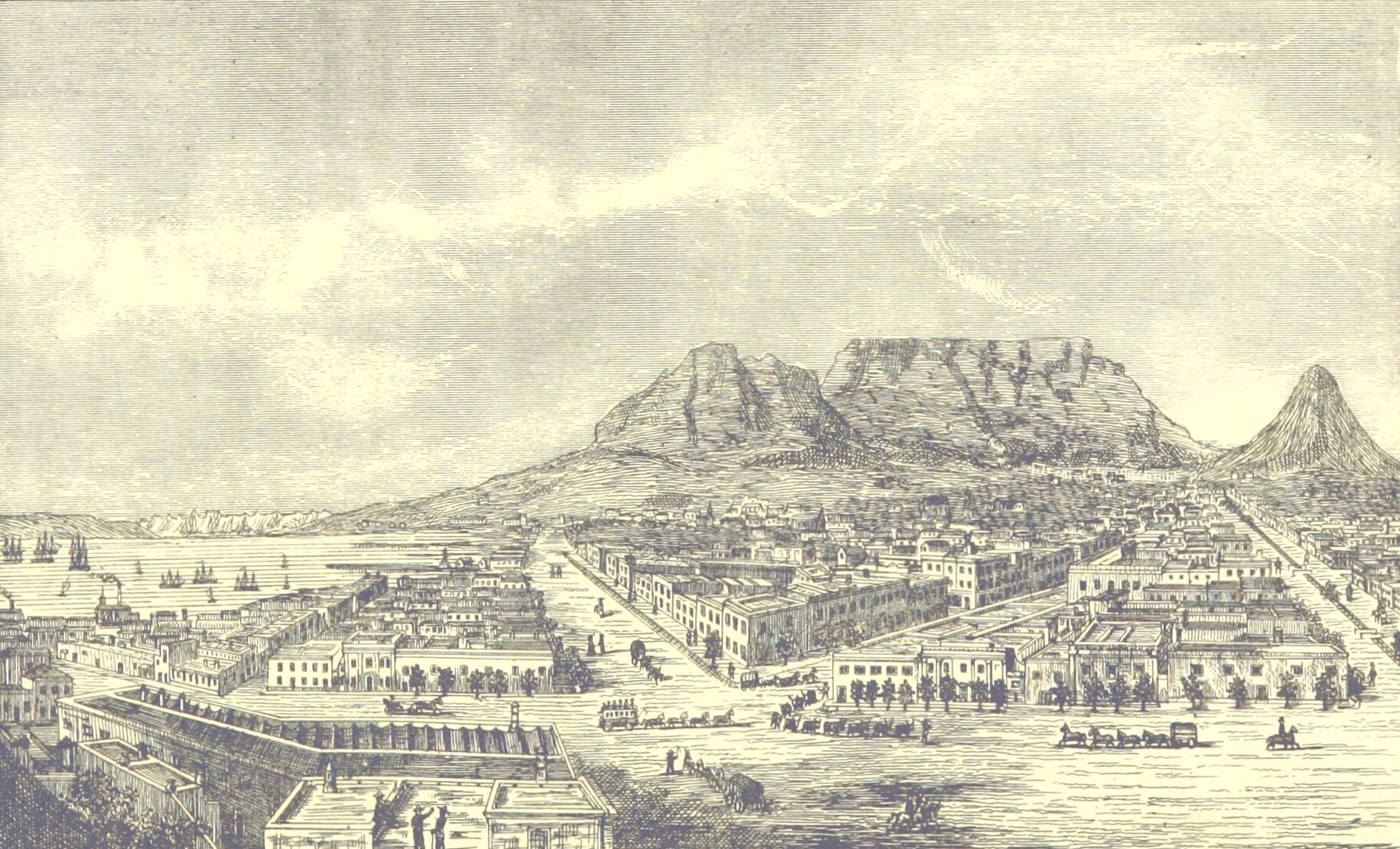
Adichie establishes a power imbalance from the opening paragraph of “Jumping Monkey Hill.” An immediate positioning of the British man and the African woman in roles of authority and subordination can be extracted from “…discreet black maids…” and, although “Ujunwa found it odd that the African Writers’ Workshop was held here…Edward Campbell chose the resort…” (Adichie). The Black women, unseen and unheard, attend to the essential, but non-skilled services. The White, British man, occupies a space of being authoritatively seen and heard – a lecturer at a university, he commands a room, authors education, makes decisions for others. He has chosen the setting for his workshop based on where he is comfortable and familiar. Adichie also, from the outset, brings the reader into a physical microcosm of coloniality where, although set in Africa, the environment is organised around White, or European, comfort, with foreign visitors “…unaware that there were more black people than red-capped lizards in South Africa.” (Adichie). From the beginning of the story, the power structures and hierarchies prevalent in colonized Africa, are articulated through a duality of ‘worlds’ that still exist in South Africa. The ‘White world’, visited by foreign tourists, is orchestrated to be just African enough to satisfy their global consumerist appetites. It is also Western/European enough to provide White locals with safe, appealing leisure and lifestyle opportunities. Black people are allowed in, but on White terms, and in carefully audited roles: labour, entertainment, authentication. The realities of the ‘Black world’ are still marked by unemployment, poverty, poor infrastructure and services, and myriad social problems. It is into this ‘White world’ that Ujunwa must enter, ironically called an African Writers’ Workshop, a space which Edward confidently fills with his blasé sexist entitlement, and gendered condescension.
Throughout the text, Adichie uses Edward to hold the space for men who use their gender, their race, and their class or wealth to belittle and subdue women. Similarly, Ujunwa does the same for women who have endured men being the gatekeepers of their careers, creativity or sexuality. Neither character has developed his/her position in a vacuum. They have each acquired the dynamics of their relationship, and interactions at “Jumping Monkey Hill,” from world impacting views, histories and systems that have pressed down upon territories and regions, from which the intersectionalities of both Edward and Ujunwa have emerged. Edward’s thoughtless lusts expressed through vulgar comments and innuendo towards a repulsed Ujunwa happen at the writers’ workshop in South Africa, they are found within the workspace in Nigeria, and they occur all over the world. Adichie draws attention to deeply entrenched male power and female objectifying endured by Black women, especially. She exposes its normative outworking in Nigerian society, displays its subtle, ‘barely-there’ disdain from the Ugandan, highlights the silent assortment of African enablers, and plants Edward firmly amongst the same behaviours found in an Africa over which he would assume superiority. Adichie does not allow patriarchy, sexism, and gender based violations to be ‘Othered.’ The White, British, upper class male, is as capable as any other of inflicting dominant abuses. Throughout the text, sexist infringements move so smoothly across regional borders, that they almost appear co-ordinated - an exercise in teamwork with the aim of covering every shape gender discrimination could adopt.
Nigerian Ujunwa’s fictional story at the writers’ workshop, written within an environment of continual harassment by Edward, is understood by the reader to express real life experiences, and a personal knowledge of cultural norms and traditions in Nigeria. This is a reflection and a critique of the normalisation of women’s subjugation to and tolerance of overt sexual impositions for economic gain. This enforced overlooking of clear boundary crossing might guarantee employment, but it holds Nigerian women in a cycle of entrapment, and dependence on men for livelihood. If the woman does not tolerate sexual harassment in the workplace, her career path could be threatened. Adichie uses Ujunwa’s story to illustrate this. “The Alhaji is lightly rubbing Yinka’s arm and saying, ‘But you know Savanna Union Bank has better rates…” (Adichie). Adichie does not leave this normalisation of patriarchy and gendered bondage in Nigeria. It is laid bare as a widespread condition affecting women everywhere, perpetrated in societies globally. The Ugandan man, in “Jumping Monkey Hill,” signifies the boundless normalising of gender dismissal. On arrival at the airport, “He bowed as he shook Edward’s hand with both of his and then turned and mumbled a hello to Ujunwa,” and without any consultation or polite dialogue with Ujunwa, “He sat in the front seat of the Renault.” (Adichie). Like many Black women caught at the juncture of lesser intersectionality, Ujunwa is not truly seen, she does not really matter. When Adichie places Edward in intrusional, unwanted proximity to Ujunwa, “Edward had moved a little and sat closer to her on the airport bench,” he acts within a context of the normalisation of women’s bodies as objects. (Adichie). And at another man’s arrival, he moves naturally into a conjoined male space in the normal dismissal of a Black woman’s equality and significance. The two men sit together in the front of the car, Ujunwa sits silently in the back. Adichie offers the reader no dialogue between them to alleviate the sense of indifference towards the female passenger, any indication of an interest in her besides the objectifying of her body. The woman is undervalued outside of sexual role-filling, and this is normalised personally, professionally, and socially. Adichie highlights the normalisation of gender prejudice as being raceless, classless, and universal. Adichie further shows that gender bias and sexism is expected, enabled and minimized, universally, and by both sexes. Again, she allows enabling full expression through Nigerian tradition and norms, but does not limit its reach, nor hold it as a Nigerian issue. Orbiting the two central figures in the dominant/dominated binary, Edward/Ujunwa, are South African, African and British observers of the predatorial/resistant dynamic, who do not intervene. The Africans say nothing, Edward’s wife never objects, even Ujunwa laughs at Edward’s lewdness – a critique on the conformist silencing into which harassed women are coerced. “’You all noticed?’ Ujunwa asked them. ‘You all noticed?’ She felt strangely betrayed.” And, “’But why do we say nothing?’ Ujunwa asked. She raised her voice and looked at the others. ‘Why do we always say nothing?’” (Adichie).
Although Adichie effectively critiques sexism and its unchecked movement across national, cultural and social boundaries – a universal problem - she does not only write about the more obvious manifestations of sexism. Represented by the Edward/Ujunwa pairing is another overlay of domination and discrimination: Adichie is offering a critique on how marginalised people, especially Black African women struggle to be heard through their writing. Not only in Nigeria, but universally, marginalised people, especially the victims of minimizing intersectionality, can suffer from literary sexism and exclusion. Edward plays the role of the doorkeeper of world literature – literature that is deemed worthy of elevation and global recognition. In “What Is a World? On World Literature as World-Making Activity,” Cheah states, “Post-industrial techniques of marketing, advertising, and value-adjudication…undermines the cosmopolitan project of world literature by depriving it of its normative force.”(Cheah 33). And “ … the current revitalization of world literature is bound to a globalized print culture industry … vulnerable to … the manipulative constitution of taste, desire and opinion by the global commodity circuits …” (Cheah 33). Edward reminds the African writers of the sources of funding, prizes and publication opportunities which underwrite his agency and power. He will determine African authenticity for the world literature stage, he will ensure that it complies with which Africa world literature consumers demand. In Pascale Casanova’s “Literature as a World,” she states, “…world literary space is not a sphere that is set above all the others, reserved exclusively for international writers, editors, critics…It is formed by all the inhabitants of the Republic of Letters, each of them differentially situated within their own national literary space,” thereby pushing aside Edward’s self-appointed literary gatekeeping. (Casanova).
“Jumping Monkey Hill” is a story which exposes the pervasive and insidious nature of sexism and sexual harassment, as well as its opportunistic tendency to brazenly tag along with racism, patriarchy and gender disempowerment. As it plays out in a local writers’ retreat between two individuals, the interaction expands and contracts across a horizontal plane between the personal, the national, the universal. Vertically, the miniscule of Edward’s world mimics the global power structures of literary curation and marginalisation. Adichie’s text highlights the silences and enabling that eases these power hierarchies’ progression across societies and down generations. Furthermore, Adichie establishes boundaries, then erases them behind her as she takes on the next level of critique. She will not allow this to remain a Nigerian, or African problem. She will not let it become an ‘Othering.’
Adichie, using Ujunwa as narrator, is able to safely and impactfully address controversial matters, but through identifiable encounters and recognisable characters. The author can remain outside of, and remote from, contentious topics, whilst still planting truths in the minds of readers, reachable through storytelling. Similarly, Ujunwa uses the same method of un-silencing. Embedded within Nigeria culture and traditions, she enters a broader African and international sphere, in which she forcefully inserts her own voice through her story’s protagonist, Chioma. Casanova calls this the “…’art of distance,’ a way of situating oneself, aesthetically, neither too near nor too far…” (Casanova). In considering the binary of imbalance that is Edward/Ujunwa, the ease of ignorant domination and curation of one over the other, it becomes evident that Goethe’s vision for world literature as “… a dynamic process of literary exchange, intercourse, or traffic…” as articulated by Pheng Cheah, has been detrimentally impacted by Global North/Global South power dynamics and hierarchies. (Cheah 27). Adichie has produced a work which strikes at the heart of prevailing obstacles to Black female empowerment, in societal structures, and in the world literary sphere – obstacles which are denying humanity world-shaping voices, voices that matter. As Casanova states, “An analysis of works originating in these zones reveals how many of the great literary revolutions have taken place on the margins and in subordinated regions…” (Casanova.) In today’s climate of the MeToo Movement, and worldwide activism against the domination and discrimination of women everywhere, “Jumping Monkey Hill” steps right into that flow of resistance with a powerful message: African women writers have a meaningful contribution to make to this global conversation. Literary marginalisation denies the world their input.
Bibliography
- Adichie, Chimamanda Ngozi. “Jumping Monkey Hill.” The Thing Around Your Neck, Alfred A. Knopf, 2009, pp. 88–106.
- Casanova, Pascale. "Literature as a World." World Literature, edited by Theo D'haen, César Domínguez, and Mads Rosendahl Thomsen, 1st ed., Routledge, 2005, pp. 14. Routledge World Literature Series, eBook, https://doi.org/10.4324/9780203721209.
- Cheah, Pheng. “What Is a World? On World Literature as World-Making Activity.” Daedalus, vol. 137, no. 3, 2008, pp. 26–38. JSTOR, http://www.jstor.org/stable/40543795. Accessed 1 Apr. 2025.
- Crenshaw, Kimberlé. "Mapping the Margins: Intersectionality, Identity Politics, and Violence against Women of Color." Stanford Law Review, vol. 43, no. 6, July 1991, pp. 1241–1299. JSTOR, https://www.jstor.org/stable/1229039.
- Hall, Stuart. "The Spectacle of the 'Other'." Representation: Cultural Representations and Signifying Practices, edited by Stuart Hall, Sage Publications, 1997, pp. 223–290.